Clog patterns that need a diagnosis
- The same drain clogs again soon after being cleared
- Several fixtures are slow or backing up at once
- One fixture backs up when a different one is used
- Gurgling sounds or bubbling in toilets and drains
- Persistent sewer odors with no obvious source
- A drain that never fully recovered after a remodel or new fixture
How we diagnose a clogged drain
Map the symptoms
We ask which fixtures are affected and how. A single slow fixture usually means a local clog in the trap or branch line. Several fixtures at once, especially on the lowest level, usually means a blockage in the building drain or sewer line.
Test the system
Running water at different fixtures and watching where it backs up helps narrow down the location of the restriction.
Look inside the pipe
When the cause is not clear or the clog keeps coming back, a drain camera inspection shows what is in the line, whether it is buildup, roots, a foreign object, a sag or a broken section.
Common causes we find
- Buildup: grease, soap scum, hair and mineral scale narrowing the pipe over time.
- Foreign objects: toys, wipes, cotton swabs, dental floss and small items lodged in traps or toilets.
- Tree roots: roots entering sewer pipe joints and cracks. See tree root removal.
- Pipe defects: sags (bellies), offset joints, corrosion and collapse that trap debris.
- Poor layout: drains added during remodels with too little slope or too many tight turns.
- Venting problems: blocked or missing vents that cause slow drainage and gurgling even without a true clog.
What clogged drain repair involves
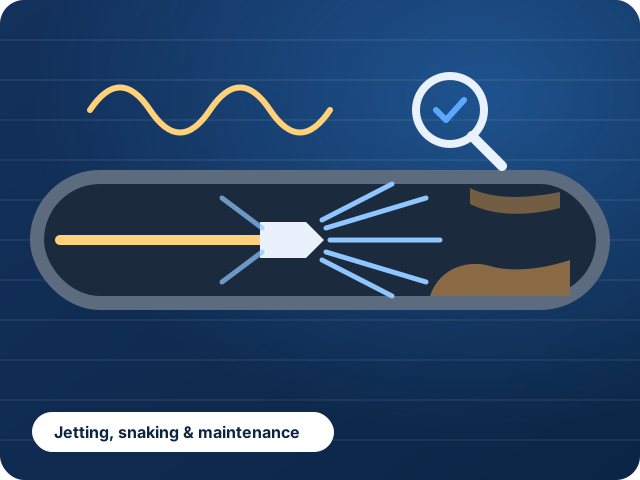
For most clogs, clearing the blockage is the repair. Local clogs in sinks, tubs and toilets are usually cleared with hand tools or a small drain auger. Main line blockages may need a larger cable or hydro jetting to clean the full width of the pipe.
Sometimes the clog points to a part that has failed: a cracked trap, a loose fixture connection or a damaged pipe section. In that case we'll show you what we found, explain what the fix involves and tell you whether it is a simple part replacement or a job for a qualified plumber or contractor. If the line only needed cleaning, we'll say that too. We don't push work you don't need.
What you can try first
For a single slow drain, a few simple steps are worth trying before calling:
- Remove and clean the sink stopper or tub drain cover, where hair often collects.
- Use a plunger with a good seal. On sinks and tubs, cover the overflow hole; on a double kitchen sink, plug the other side so the pressure goes toward the clog.
- Clean the P-trap under a sink if you are comfortable doing so, with a bucket underneath.
Skip chemical drain openers. If more than one fixture is affected, call instead of trying to force the clog.
Clogged Drain Diagnosis & Repair in Long Beach, step by step
- 1
Listen to the symptoms
We ask what is clogged, when it started and whether it has happened before.
- 2
Locate the blockage
We test fixtures and, when needed, run a camera to find the restriction and its cause.
- 3
Clear it properly
We use the method that fits the pipe and the material, from hand tools to jetting.
- 4
Explain the fix
We tell you what caused it and whether maintenance, a part replacement or simple habit changes will prevent it.
Clogged drains in older Long Beach homes
In Zaferia, Rose Park and Carroll Park, many homes have been expanded and remodeled over the decades. A new bathroom, a relocated laundry or an added kitchen sink is often tied into original drain lines that were never sized or sloped for it. Those connections are a common source of clogs that keep coming back, and they are easy to miss without testing each fixture and, when needed, looking inside the line.
If your home has had additions and one drain has never worked quite right since, tell us when you call. Knowing what was added and when helps us find the problem faster.