When a drain camera inspection helps
- The same drain keeps clogging after it has been cleared
- A drain was cleared but still runs slower than it should
- You want to see what caused a backup before deciding on repairs
- Something was dropped or flushed and you need to know where it is
- A floor, kitchen or laundry line has a smell that will not go away
- You want to see whether a cleaning actually removed the buildup
What a drain camera can see
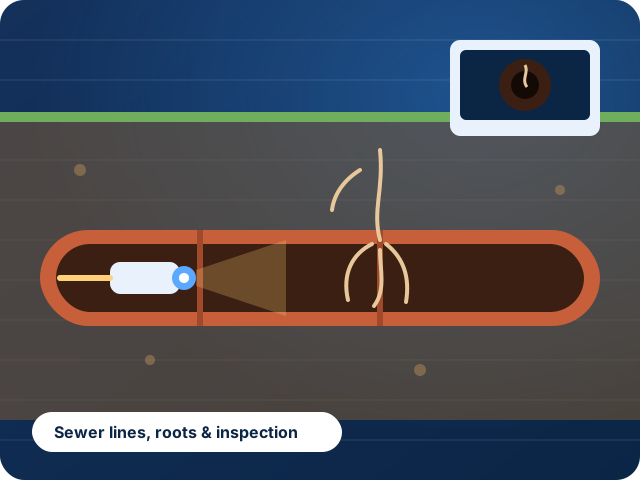
A camera inspection turns a hidden pipe into something you can watch. Common findings include:
- Grease and buildup narrowing a kitchen line, often worst at fittings and low spots.
- Hair and soap scum collected in bathroom branch drains.
- Scale and corrosion inside older cast iron or galvanized pipe.
- Foreign objects such as toys, wipes or utensils lodged in a line.
- Root intrusion at joints in underground sections of the line.
- Sags, cracks or offsets where water collects or debris snags.
A camera cannot see through standing water or the outside of the pipe, so a stopped line is usually opened first.
What the footage tells you to do next
The picture usually points to one of a few paths. Heavy buildup in a sound pipe often means hydro jetting is the next step. A lodged object may be retrievable with the right cable head. A sag, crack or offset is something to monitor or have a qualified contractor evaluate, and you will know where it is and how extensive it looks before any repair is discussed.
When the question is why a drain keeps failing, camera work is one part of a broader troubleshooting process, covered on our clogged drain diagnosis page.
Verifying that drain cleaning worked
A drain that flows after cleaning is not always clean. Running the camera after snaking or jetting shows whether the pipe walls are clear and whether anything was missed. That is especially useful for kitchen lines and for commercial drains, where buildup returns quickly if it is not fully removed.
Locating problems above ground
Many drain cameras carry a small transmitter in the camera head. With a receiver above ground, we can estimate the position and approximate depth of a problem area, which helps if work is needed under a floor, slab or yard. The cable also shows the distance from the access point, so findings can be described clearly.
Camera inspection or sewer line inspection?
This page covers camera work on drain lines in general: kitchen, bathroom, laundry and floor drains, plus the main line when a clog is involved. For a dedicated condition assessment of the building sewer, for example before buying a home, see sewer line inspection.
Drain Camera Inspection in Long Beach, step by step
- 1
Choose the access point
We use a cleanout, fixture drain or other access that gives the camera a clear path into the line.
- 2
Run the camera
The camera is pushed through the line while we watch the live picture and note distances.
- 3
Mark the findings
Where needed, we use the camera's locator to estimate where a problem sits above ground.
- 4
Explain what we saw
We walk you through the footage and recommend cleaning, monitoring or a contractor's evaluation based on what the pipe shows.
Mid-century homes in Los Altos and Park Estates
Many homes in Los Altos and Park Estates date from the postwar decades and have since been remodeled, with kitchens moved, bathrooms added or garages converted. New fixtures are often tied into older lines, and drains may run under slab floors where nobody can see them.
A camera inspection shows how those old and new sections actually connect, where a line turns or changes material, and where a problem spot sits under the floor or yard. That is useful before a remodel and when a drain in a recently updated room starts acting up.