When hydro jetting is worth considering
- A drain or sewer line has been snaked more than once and keeps clogging
- Kitchen lines are slow because of grease and food buildup
- A camera inspection shows sludge or a heavy coating on the pipe walls
- Fine roots are spread through a section of the line
- A restaurant or commercial kitchen needs lines cleaned on a schedule
- Sand, silt or mud has washed into a line after a storm
How hydro jetting works
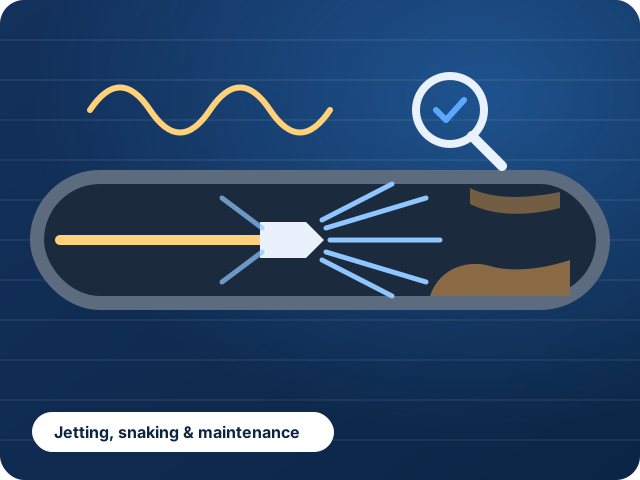
A jetter pumps water through a reinforced hose to a nozzle sized for the pipe. Rear-facing jets propel the nozzle forward and scrub the full circumference of the pipe as the hose is pulled back. Different nozzles suit different jobs: breaking up a blockage, scouring grease, or cutting soft root growth.
The main difference from a cable is coverage. A cable opens a path through a clog, while water reaches the whole pipe wall. Many jobs use both, a cable to open the line and jetting to clean it. Our drain snaking and auger page explains the cable side.
What jetting does not remove
Standard nozzles handle grease, sludge, soft debris and fine roots well. Hard tuberculation and heavy scale inside old cast iron may need mechanical descaling instead, and large woody roots usually need a cutting head first.
Is hydro jetting safe for my pipes?
Jetting is safe for pipes in sound condition, including many older clay and cast iron lines. It is not right for every pipe. Severely cracked, offset, collapsed or badly corroded sections can be damaged further by high pressure, and jetting cannot fix a broken pipe.
For sewer lines, we prefer to see inside before jetting. Once the line is open enough to scope, a drain camera inspection shows the pipe material, the joints and any areas to avoid. We adjust pressure and nozzle to the pipe, and if jetting is not appropriate we say so and explain the alternatives.
Where hydro jetting is used
- Main sewer lines with recurring buildup. See sewer line cleaning.
- Kitchen drain lines where grease has narrowed the pipe over time.
- Commercial kitchens that need lines cleared between interceptor services. See grease line cleaning.
- Root-affected laterals, as one part of root removal.
- Floor drains and building drains in garages and multi-unit buildings.
- Lines with sand or silt. Flushing clears it, but sand usually means a joint is open somewhere, and it tends to come back until that joint is repaired.
What to expect on the day
We need access to a cleanout or another suitable entry point, and a nearby outdoor hose bib can help with water supply. Jetting can be loud and some water may splash at the access point, so we protect the work area and clean up afterward. We then run water through the line to test it and, where practical, follow up with a camera so you can see the result.
Hydro Jetting in Long Beach, step by step
- 1
Assess the line
We ask about the drain's history and, for sewer lines, check pipe condition with a camera once the line is open enough to scope.
- 2
Choose pressure and nozzle
We select a nozzle and pressure suited to the pipe size, material and the type of buildup.
- 3
Jet the line
The nozzle works through the line, breaking up the blockage and scouring the walls as it goes.
- 4
Test and show you
We run water to test flow and, where practical, show you camera footage of the cleaned line.
When jetting fits Long Beach pipes, and when it does not
Many older Long Beach houses still drain through original cast iron, which roughens and narrows inside as it ages. Jetting can clear the grease and sludge that cling to that rough surface, but thin or heavily corroded sections call for lower pressure or a different method, which is why we look before we jet.
Apartment and condo buildings are a different case. Shared kitchen stacks and building drains collect grease from many households, and a cable often reopens them only briefly. In sound pipe, jetting the shared line from a common cleanout can address the buildup that keeps sending backups into ground floor units.