Signs a maintenance plan makes sense
- The same drain or sewer line has been cleared two or more times
- A camera inspection showed roots, grease or a low spot in the line
- Your property has large trees near the sewer lateral
- You run a restaurant, cafe or other business with heavy kitchen use
- You manage rental units where tenants control what goes down the drain
- You want to plan drain costs instead of reacting to emergencies
What preventive maintenance includes
A maintenance plan is built around your actual pipes, not a generic schedule. Depending on what we find, it may include:
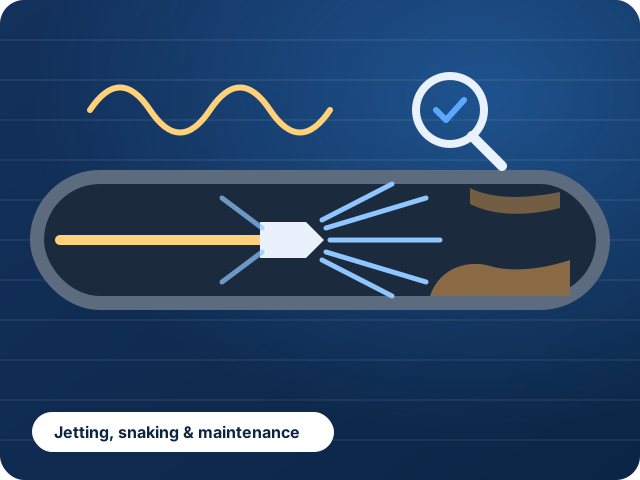
- Scheduled main line cleaning to clear roots or buildup before they block the line. See sewer line cleaning.
- Jetting for kitchen and commercial lines with grease or sludge. See hydro jetting.
- Root cutting at known intrusion points. See tree root removal.
- Periodic camera checks to see how the line is holding up and whether the interval should change.
- Seasonal outdoor and floor drain cleaning, such as storm drain cleaning before the rainy season and floor drain cleaning for garages and kitchens.
How we set the right interval
There is no single schedule that suits every property. The interval depends on what is causing the buildup and how quickly it returns.
Root intrusion
Roots grow back after cutting, often faster in warm months. Root-prone lines are commonly cleaned somewhere between every few months and about once a year, depending on the tree, the pipe and how much growth returns between visits.
Grease buildup
Restaurants and busy kitchens may need cleaning more often than homes. The amount of buildup found at each visit tells us whether to shorten or lengthen the interval.
Structural issues
A belly, offset joint or partial collapse will keep collecting debris. Maintenance can manage the problem while you plan a repair.
After the first cleaning, ideally paired with a camera inspection, we'll recommend a starting interval and adjust it based on what we see.
What you get from each visit
Maintenance is only useful if it tells you something. After each visit we'll explain what we cleaned, how much buildup or root growth we found compared with last time, and whether the interval still makes sense. If we ran a camera, we'll walk you through what it showed; ask whether a recording is available for your job.
Maintenance does not fix a broken pipe. It keeps a line working while the underlying issue is managed. If an inspection shows serious damage, we'll say so plainly. In some cases regular cleaning is a reasonable long-term choice. In others, a repair by a qualified contractor is the better investment. Either way, you decide on your own timeline.
Simple habits between visits
- Keep grease, wipes, paper towels and feminine products out of drains and toilets, even if packaging says flushable.
- Use strainers in kitchen sinks, tubs and showers.
- Keep fibrous and starchy food out of the garbage disposal.
- Know where your sewer cleanout is so it can be reached quickly.
- Call early when a drain slows down, before it stops completely.
Preventive Drain Maintenance in Long Beach, step by step
- 1
Clean and inspect
We clear the problem line and, where useful, run a camera to see what is causing buildup.
- 2
Recommend an interval
We suggest a schedule based on the cause, the pipe condition and how the property is used.
- 3
Service on schedule
We return at the agreed intervals and clean before buildup becomes a backup.
- 4
Compare and adjust
We compare findings over time and lengthen or shorten the interval as needed.
Why maintenance suits many Long Beach properties
California Heights and Los Cerritos are good examples of where scheduled cleaning pays off. Both neighborhoods have established homes and large, mature trees along the streets and in yards, and older sewer laterals with joints that roots can find. A line like that rarely stays clear for good after one cleaning, but it often follows a steady cycle that can be planned around.
The same logic applies to the city's many duplexes, fourplexes and apartment buildings, where shared lines and changing tenants make repeat clogs common. Because the private lateral is generally the owner's to maintain (see our FAQ), a schedule lets landlords and homeowners manage it on their own terms.